India’s life insurance grew 39% in April. Half the growth was LIC’s group fund business.
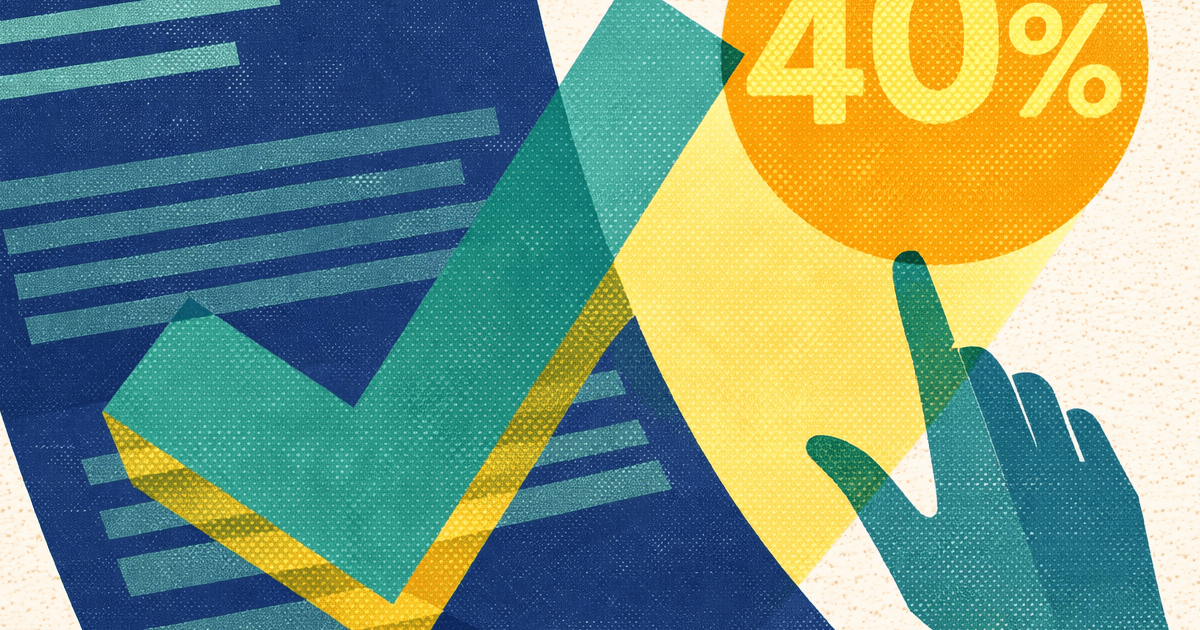
Life insurance companies collected Rs 30,550 crore in first-year premium in April 2026, a 39% increase over April 2025, according to IRDAI’s monthly new business statement. Group schemes covered 2.1 crore lives, up 48%. But the number of new policies and schemes grew only 13%. When premium grows three times faster than policy count, the product mix is doing the heavy lifting.
Group single premium was Rs 18,963 crore. That is 62% of all first-year premium collected in the month, and it grew 44% year-on-year. Individual first-year premium, the category that captures households’ own buying decisions, was Rs 9,459 crore, up 19%. A year ago, individual premium was 36% of the total. It is now 31%.
What sits inside group single premium
IRDAI reports one number for group single premium, and it mixes two very different products. One is group fund business: gratuity, superannuation and leave-encashment money that employers hand to an insurer to manage. The other is credit life, the cover lenders attach to loans, usually for one upfront premium. The monthly statement does not split the two. The cover and the number of lives give the mix away.
LIC collected Rs 14,788 crore in group single premium in April, up 43%. That premium covered 7,442 lives, with a total sum assured of Rs 37 crore. Rs 14,788 crore of premium for Rs 37 crore of cover is not protection; it is the profile of fund business. Private insurers collected Rs 4,175 crore in group single premium, covering 1.04 crore lives with Rs 1.69 lakh crore of sum assured. That is where most credit life sits, alongside some private fund business.
The growth arithmetic follows from that. The industry added Rs 8,586 crore over April 2025. LIC’s group single premium supplied Rs 4,423 crore of it, about 52 paise of every new rupee. Private insurers’ group single premium added Rs 1,403 crore (16 paise). Individual premium added Rs 1,534 crore (18 paise).
Credit life is growing fastest at private insurers
Private insurers’ group single premium grew 51% in April. HDFC Life’s was Rs 1,521 crore, 60% of its first-year collection for the month. Bajaj Life’s grew 86%, Aditya Birla Sun Life’s 162% and Kotak Life’s 48%. SBI Life’s was Rs 528 crore, up 38%. These figures include credit life sold through partner lenders as well as employer fund schemes; IRDAI’s monthly data does not separate them by insurer.
IRDAI has described how credit life is sold. Its September 2026 consultation paper on distribution reforms says these products “are generally offered at the point of loan origination, where customers often have limited opportunity to compare products, choose the insurer or negotiate the premium”, and estimates effective pay-outs to distributors on group credit life at around 45% (Part 2, p.18). It proposes to prohibit compulsory bundling of insurance with loans; a lender that wants its loan book insured “may take group policy and pay premium as expense of the institution” (Part 1, p.58). It also proposes capping commission on loan-linked pure term cover sold by lenders at 2% of a single premium (Part 1, p.52). These are proposals. Comments close on 25 October 2026.
What borrowers should know
Credit life insurance covers a loan. If a borrower dies, the insurer settles the outstanding loan and the family keeps the home. The policy is issued alongside the loan, usually with little or no individual medical underwriting. For a family whose home loan is its largest financial obligation, that protection is direct and tangible.
The product has specific characteristics, though. On most credit life covers the sum assured declines as the loan is repaid. The premium, paid upfront, reflects pooled risk rather than your own health. And the cover is tied to that specific loan. When the loan ends, the policy ends.
A standalone term plan works on different principles. Cover stays level for the whole term. Premium is individually underwritten, priced to your age, health and habits. The payout goes to your family with no restriction on its use. Credit life cannot do that.
India’s life insurance industry grew 39% in the first month of FY27. About half of that growth was LIC’s group fund business, which is retirement money managed for employers rather than life cover. Individual policies, the ones households choose for themselves, grew 13% in number and 19% in premium. Read the headline number with that split in mind.
Sources: IRDAI, First year premium of Life Insurers as at 30.04.2026 (all April 2026 and April 2025 figures); IRDAI, Consultation paper on Distribution Reforms, Part 1 and Part 2 (September 2026).
Correction, 12 October 2026: An earlier version of this article said group single premium was dominated by credit life, that 68 paise of every new rupee in April came from credit life, and that two-thirds of the month’s growth came from the lending boom. IRDAI’s data shows most of that line was LIC’s group fund business: Rs 14,788 crore of premium covering 7,442 lives and Rs 37 crore of sum assured. We have corrected the headline, summary and analysis, and removed retail-credit and bank-advances figures we could not verify against a primary source.
Related reading: Home loan insurance vs term insurance: why loan cover alone isn’t enough. See also: Q1 FY27: private insurers narrow the gap on LIC.
Try our free tools
Disclaimer: This article is for informational purposes only and does not constitute insurance advice. Consult an IRDAI-registered insurance advisor for recommendations tailored to your specific financial situation and needs.
Was this article helpful?
Your feedback helps us improve our guides

Reviewed and Edited by
Ashok HegdeAshok Hegde is the Chief Executive Officer at Quantent, where he leads a team of media professionals helping clients leverage digital media for better business outcomes. With over 30 years of experience across print and digital media, he advises clients on content and media strategy — from startups to established brands. His focus is on helping organisations use online media — social, search, and mobile — to build brand awareness, drive sales, and protect reputation.