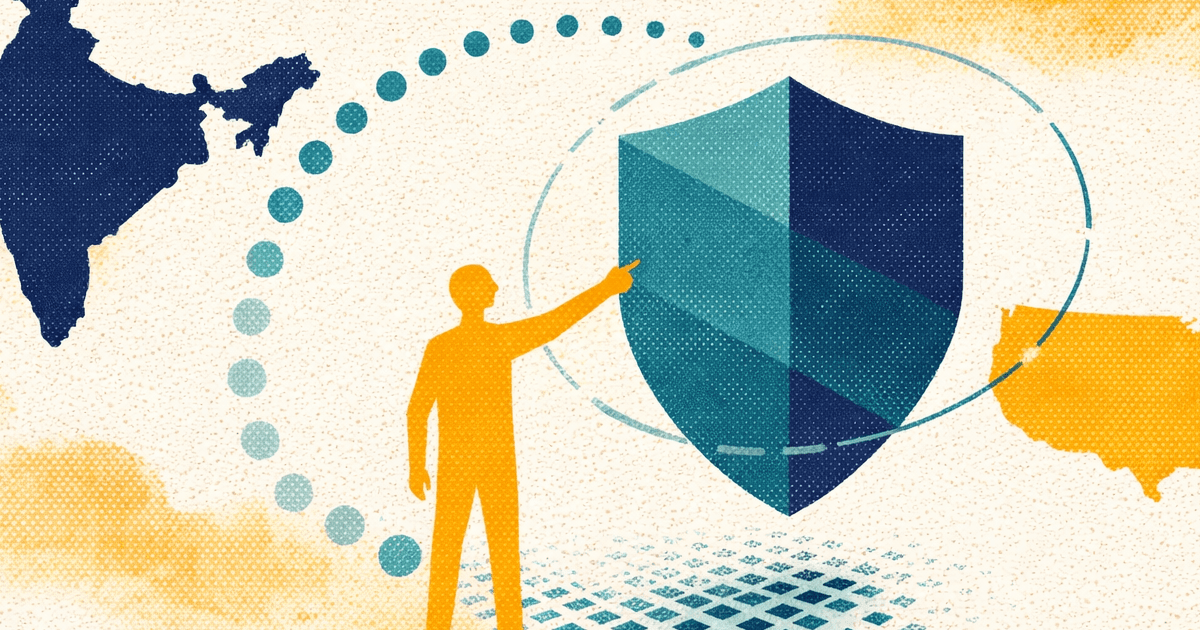
Buying term insurance in India used to mean filling out a paper form, waiting for a medical examiner to visit your home, and then waiting 3-6 weeks for a decision. In the last few years, two technologies have begun reshaping this process: artificial intelligence (AI) in underwriting and digital KYC (Know Your Customer) for identity verification. Together, they are making the buying process faster, but they are also changing how insurers assess your risk.
Here is what these changes mean for you as a policyholder.
Cheat Sheet
•
AI underwriting analyzes your data (medical history, lifestyle, financials) faster and more comprehensively than a human underwriter, often issuing decisions in minutes instead of weeks.
•
Digital KYC (Aadhaar-based eKYC, video KYC) eliminates paper-based identity verification, reducing onboarding time from days to minutes.
•
For simple applications (young, healthy, non-smoker, low cover), the entire process can now happen in a single sitting.
•
For complex applications (high cover, medical history, older age), AI flags risks faster but may also be stricter about requiring additional tests or documentation.
•
Disclosure is more important than ever: AI cross-references multiple databases, making it harder to conceal medical or financial information.
How Traditional Underwriting Worked
To appreciate what is changing, it helps to understand the old process:
- Application: Fill out a paper form with personal, medical, and financial details.
- Medical exam: A paramedic visits your home or you visit a clinic for blood tests, ECG, and physical examination.
- Manual review: An underwriter reviews your application, medical reports, and financial documents. This person makes a judgment call on your risk category.
- Decision: Approve at standard rates, approve with loading (higher premium), approve with exclusions, or reject.
- Timeline: 2-6 weeks depending on complexity.
This process is manual, slow, and depends heavily on the individual underwriter’s judgment. Two underwriters looking at the same application could reach different conclusions.
Did You Know
Under traditional manual underwriting, two different underwriters reviewing the same application could reach different conclusions — which means your premium could vary depending on who happened to review your file.
What AI Brings to Underwriting
AI-powered underwriting does not replace the decision; it replaces (or augments) the human reviewer with algorithms that can process data faster and more consistently.
Data sources AI can access:
- Insurance Information Bureau (IIB): Checks if you have existing policies or past claims with any insurer.
- Medical records: Hospital records, pharmacy purchases, lab reports (where digitally available).
- Financial data: Income tax filings, credit bureau reports, bank statements (with consent).
- Demographic and lifestyle data: Location, occupation, travel patterns (aggregated, not individually tracked).
What AI does with this data:
- Risk scoring: Assigns a numerical risk score based on thousands of data points, not just the 20-30 questions on a traditional form.
- Pattern detection: Identifies correlations between risk factors that a human underwriter might miss (e.g., the combination of occupation + BMI + location predicting higher risk).
- Instant decisions: For low-risk profiles (young, healthy, low cover amount), AI can approve the application in minutes without manual review.
- Flagging: For complex profiles, AI flags specific concerns for a human underwriter to review, rather than making the final decision itself.
How Digital KYC Works
KYC (Know Your Customer) is the identity verification step required by IRDAI before issuing any insurance policy. Traditionally, this meant submitting physical copies of your PAN card, Aadhaar card, and address proof, which were then manually verified.
Digital KYC replaces this with electronic verification:
| KYC Method | How It Works | Time Required |
|---|---|---|
| Aadhaar eKYC | OTP-based verification against UIDAI database | Under 2 minutes |
| Video KYC | Live video call with a KYC officer who verifies your ID documents on camera | 5-10 minutes |
| DigiLocker | Pull verified documents directly from government DigiLocker | Under 2 minutes |
| CKYC (Central KYC) | If you have completed KYC with any financial institution, the record is shared | Instant lookup |
For the policyholder, this means no more courier-ing photocopies or visiting a branch office. You can complete KYC from your phone while sitting on your couch.
What This Means for You as a Buyer
The good:
- Speed: Simple applications can be approved in minutes instead of weeks. Some insurers now offer “instant issue” policies for profiles that pass AI screening.
- Consistency: AI applies the same criteria to every application. There is less variability based on which underwriter reviewed your file.
- Convenience: Digital KYC means the entire purchase process can happen online, from application to policy issuance, without a single physical document or in-person visit.
- Potentially lower premiums: As AI reduces operational costs for insurers, some of that savings may translate into lower premiums over time.
The not-so-good:
- Less room for explanation: A human underwriter might accept a borderline case with a written explanation. AI works on data patterns and may flag you for additional review with no easy way to explain nuance.
- Harder to hide information: AI cross-references IIB records, medical databases, and financial data. Non-disclosure of a pre-existing condition is more likely to be caught at the application stage (which is actually good for your claim later, but may feel uncomfortable during the buying process).
- Data privacy concerns: The more data insurers access, the more sensitive information is being processed. IRDAI has guidelines on data protection, but as a buyer, you should understand what data you are consenting to share.
Case Study: Two Applications, Same Day
Neha, 28: Non-smoker, no health conditions, BMI 22, applying for ₹75 lakh cover. She fills out the online application, completes Aadhaar eKYC, and the AI system approves her instantly (no medical test required for this age/cover combination). Policy issued in 45 minutes. Total documents submitted: Aadhaar OTP + PAN number. No human underwriter was involved.
Did You Know
A straightforward application (young buyer, no health flags, modest cover amount) can now result in a policy issued in 45 minutes, with just an Aadhaar OTP and PAN number required.
Suresh, 45: Former smoker (quit 3 years ago), BMI 28, family history of diabetes, applying for ₹2 crore cover. AI flags three risk factors: smoking history, elevated BMI, and family history. The system routes his application to a human underwriter with a recommendation for full medical panel + HbA1c test. Suresh completes the tests within a week. The underwriter reviews the AI risk score + medical results and approves with a 15% premium loading. Total timeline: 3 weeks.
Both applicants went through the same system. The AI handled the simple case end-to-end and routed the complex case to a human with specific questions already identified. The result: faster processing for both, but through different pathways.
FAQs
Does AI underwriting mean I can skip the medical test?
For low-risk profiles (young age, low cover amount, no health flags), some insurers now offer “no medical test” policies approved entirely by AI. For higher cover amounts or older applicants, medical tests are still required. AI decides whether to waive the test based on your risk profile.
Is digital KYC accepted for all term insurance policies?
Yes. IRDAI has approved digital KYC (including Aadhaar eKYC and video KYC) for all insurance products. Most major insurers now offer fully digital onboarding for term insurance.
Key Fact
IRDAI has officially approved Aadhaar eKYC and video KYC for all insurance products. No insurer can refuse digital onboarding on the grounds that physical document submission is mandatory.
Can AI access my medical records without permission?
No. Insurers require your explicit consent to access data from the Insurance Information Bureau, medical databases, or financial records. You will be asked to sign a consent form (physical or digital) as part of the application. However, once you consent, the AI system can cross-reference information from multiple sources, making it harder to omit relevant health history.
Watch Out
Once you consent to data sharing, AI systems can pull simultaneously from the Insurance Information Bureau, medical databases, and financial records; a pre-existing condition you skip on the form may still surface, and if it does after a claim is filed, it can void your policy.
Will AI make term insurance cheaper?
Potentially. AI reduces operational costs (fewer manual underwriters, faster processing, less paperwork). Some of these savings can be passed to customers as lower premiums. Additionally, AI’s better risk assessment means insurers can price more accurately: low-risk individuals may pay less, while high-risk individuals may pay more than they would under a blunt one-size-fits-all pricing model.
Is my data safe with digital KYC?
IRDAI mandates that insurers comply with data protection norms. Digital KYC data must be encrypted, stored securely, and used only for the stated purpose. That said, no system is immune to breaches. Understand what data you are sharing, and verify that the insurer has a clear privacy policy and data protection certification.
“Digital tools have increased awareness, which is good. Clients now come with some basic understanding. However, many don’t fully interpret the results correctly. Calculators give numbers, but they don’t understand personal circumstances. Advisory still plays an important role in bridging that gap.”
— Mit Haria, Founder, Haria and Associates
What This Means for You
Quick Tip
Before you start your application, put together a digital folder with recent blood reports, discharge summaries, and any prescription history — the process is faster now, and you don’t want to be the bottleneck.
AI and digital KYC are making term insurance faster and more convenient to buy. Simple applications that once took weeks now take minutes. But these technologies also make the process more data-intensive: insurers see more of your health, financial, and lifestyle information than ever before. For buyers, the practical takeaway is straightforward: be completely honest in your application (because AI will cross-check), keep your medical records organized, and take advantage of the speed and convenience that digital processes offer. The days of 6-week application cycles are ending, and that benefits everyone.
Related Reading
Try our free tools
Disclaimer: This article is for informational purposes only and does not constitute insurance advice. Consult an IRDAI-registered insurance advisor for recommendations tailored to your specific financial situation and needs.
Was this article helpful?
Your feedback helps us improve our guides

Reviewed and Edited by
Hardik LashkariHardik Lashkari is a Chartered Accountant and finance content specialist with over six years of experience writing for fintech and financial services brands. He specialises in translating complex financial topics into clear, credible content — from insurance and taxation to investing and personal finance. At Gyansurance, Hardik covers the how-to side of term insurance: buying guides, policy maintenance, digital underwriting, and the fine print buyers often miss.